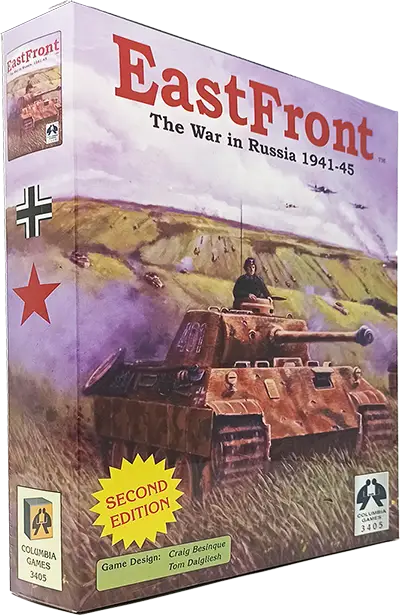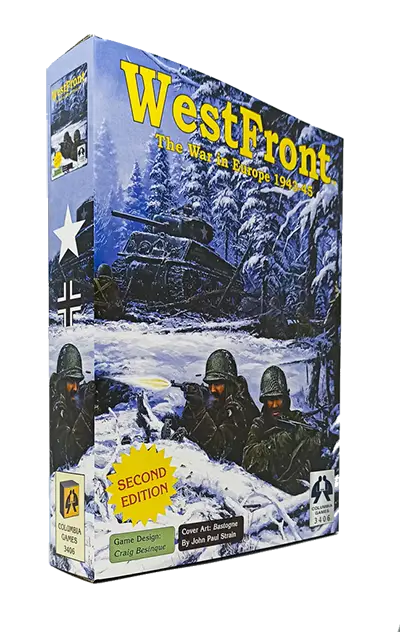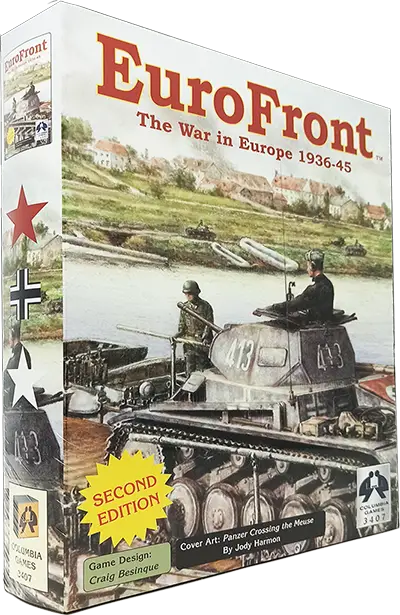
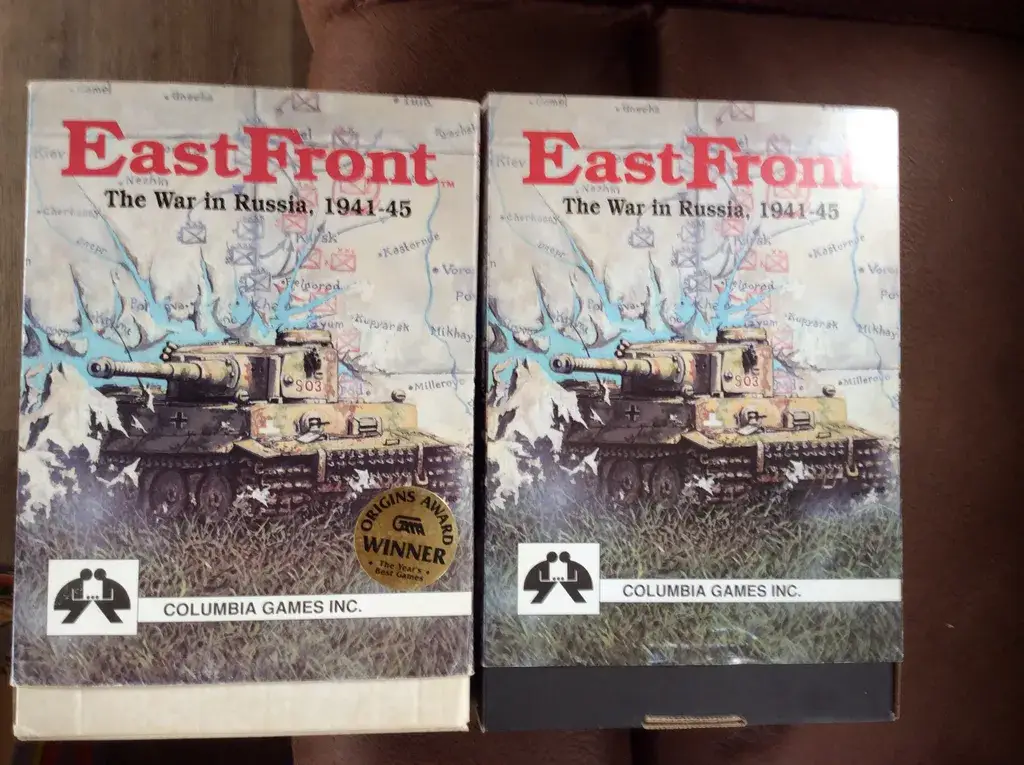
EastFront 2nd Ed. Bundle
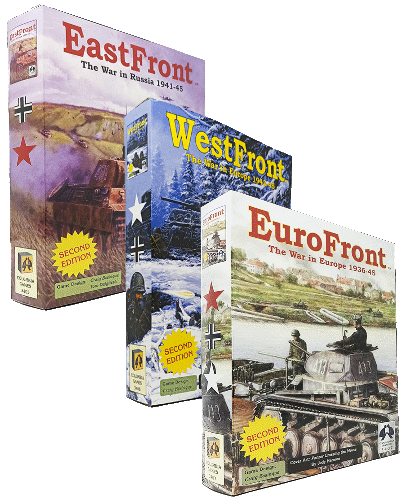
EastFront, WestFront, and EuroFront are a three game series. EastFront and WestFront are playable independently and seamlessly integrate into EuroFront. This EuroFront bundle includes all three games in the EuroFront 2nd edition series: EastFront, WestFront, and EuroFront. Save nearly 20% with this bundle price.
Barbarossa: June 22, 1941, Germany invades the Soviet Union to begin a titanic four year struggle unmatched in military history.
Command the Soviet Red Army or the German Wehrmacht on the vast steppes of Russia.
EastFront has been played and loved by thousands of wargamers all around the world for about 30 years.
Recreate WWII in the west from the 1943 Allied invasion of Italy, through the Normandy landings of 1944, to the conquest of Germany in 1945.
Both sides face unique strategic challenges. The Axis must garrison the coastline from Denmark to the Balkans (including Spain) and react to enemy landings wherever they strike. Successful Allied invasions require planning and skill to adapt to the German defense. EuroFront links EastFront and WestFront together into a complete simulation of WWII in Europe.
The game contains the EuroFront system rules and over 240 blocks for every European nation from Norway to Turkey.
Important: EuroFront is not a stand-alone game. EastFront and WestFront are required.
INTRODUCTION
EastFront, WestFront, and EuroFront are sophisticated yet playable wargames, enjoyed by thousands of gamers worldwide for nearly 20 years. Now in their 2nd edition, these classic games are an excellent addition to your library.
THE UNITS
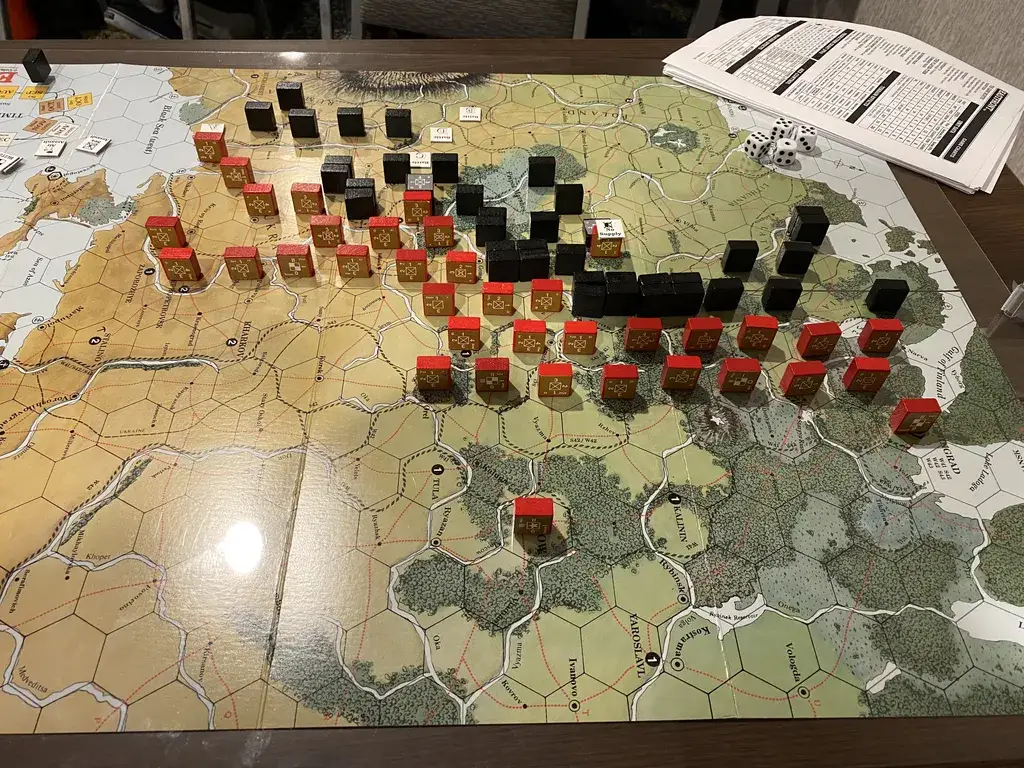
Wooden blocks, called units, represent German corps and Axis minor armies (gray) and Soviet armies (red). A die-cut, adhesive label identifying a unit's type and strength is attached to each block.
Units in play normally stand upright, with their labels facing the owning player. This provides simple yet elegant Fog of War in that players cannot see the type or strength of opposing units.
The six basic unit-types are: Armor, Mechanized Infantry ("Mech"), Infantry, Shock, Cavalry, and Headquarters. As each unit-type has a fixed movement rate and firepower rating, these numbers are not shown on the label.
The large numbers surrounding the unit symbol show the unit's strength, called Combat Value ("CV"). Units gain and lose strength in steps of 1cv. A unit's current strength is the number along its top edge when standing upright.
THE MAPS
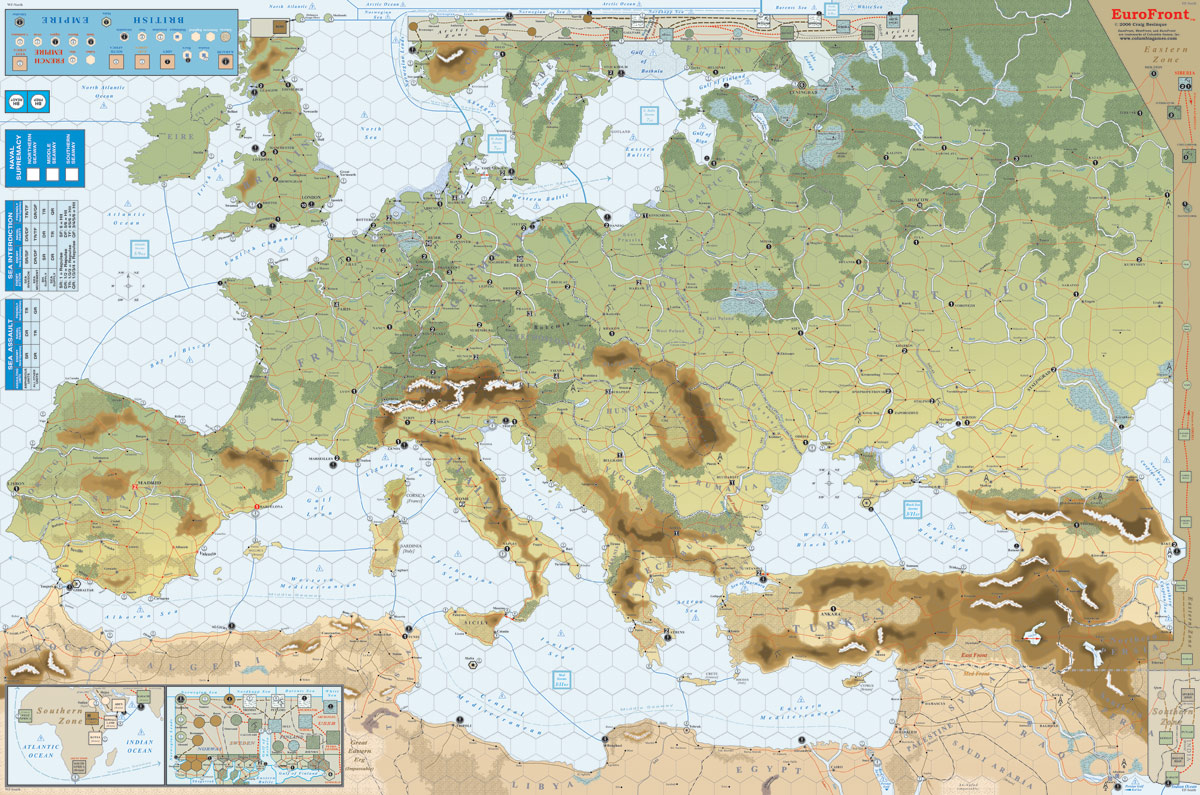
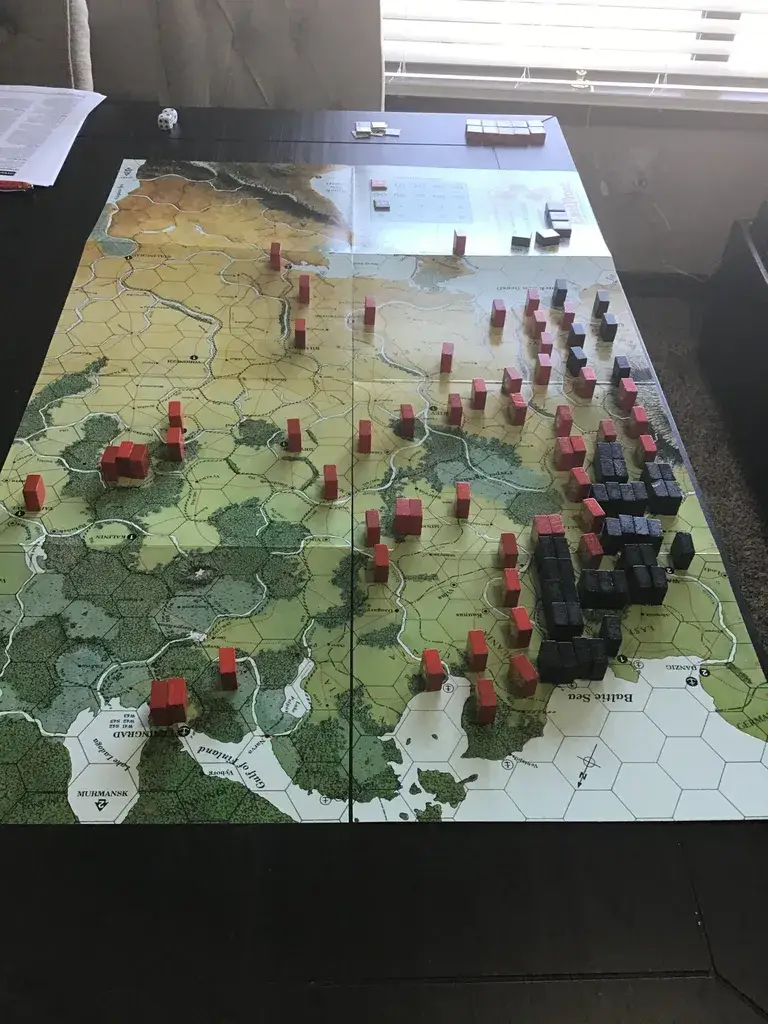
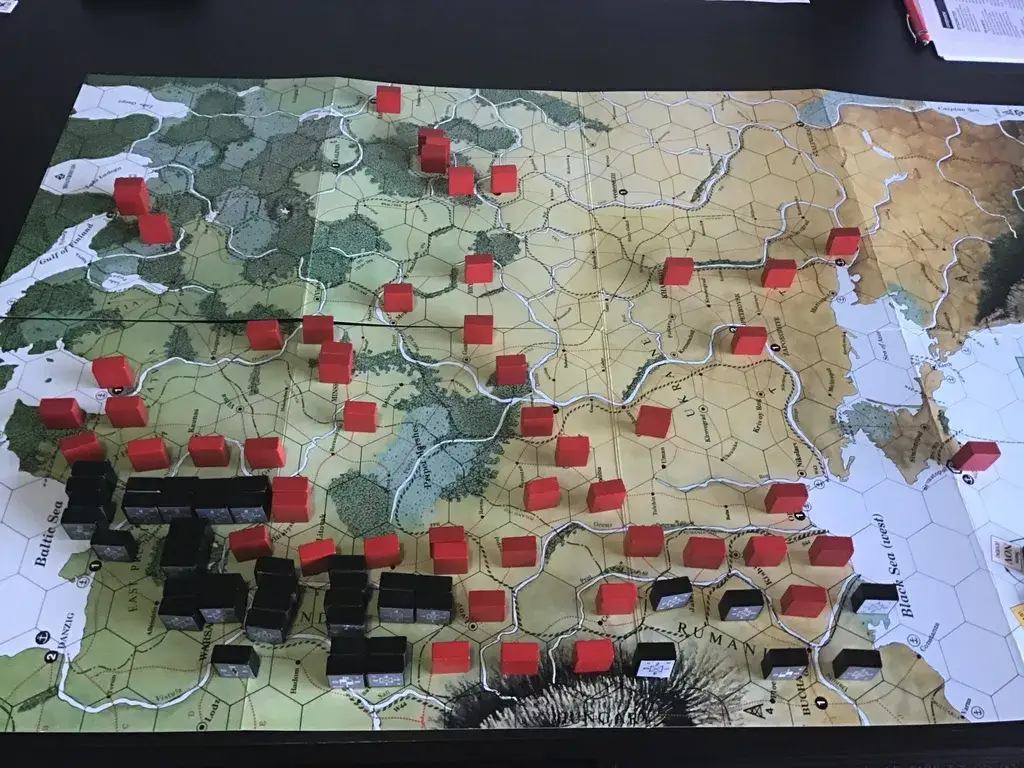
The game contain large colorful maps divided into hexagons, called "hexes", to determine location and movement. Terrain features affecting play include: rivers, forests, mountains, marshes, cities, ports, and railways.
WEATHER
Weather exerts a considerable influence in the game, affecting unit speeds and turn sequence. Mud and Snow weather also alter some terrain, further affecting movement and combat, and can reduce the command range of HQs. During most months the weather is known, but during Spring and Fall it is unpredictable and determined by die roll.
GAME TURNS
A month consists of a Production segment followed by two Fortnights of play. Production involves adding replacement steps to units in play, and rebuilding destroyed units into 1cv units, or cadres. Control of economic objectives on the map yields Production Points, which are used to "pay" for these builds. Both players perform production simultaneously.
A Fortnight consists of two alternate Player-Turns. The Axis take the first Player-Turn in Dry and Mud weather. The Soviets take the first Player-Turn in Snow weather.
The player taking the current Player-Turn is called the Active Player (the other player is Passive). A Player-Turn usually begins by activating one or more HQ units. Each activated HQ, depending on its current strength, exerts command over all units within a Command Range of 0-3 hexes, enabling these units to move.
COMBAT
Battles occur when both players have units in the same hex. During combat, units are revealed to the opponent. Battles are not necessarily settled immediately. They sometimes continue for several months until one side retreats or is destroyed. Combat may occur in any ongoing Battle at the option of the Active player, and must occur on the first turn of a Battle. Any combat occurring outside Command Range is fought by the active player at a disadvantage.
A round of combat consists of an exchange of fire: airpower first, then defensive fire, and finally offensive fire. Enemy fire results in unit attrition. Forced retreats (repulses) may occur in cases of River, Air, or Sea Assaults.
VICTORY
For game purposes, the Eastern Front campaign is divided into scenarios, each covering a 6-month period of the war. A scenario can be played in a sitting (4-6 hours), and two or more scenarios can be joined for longer games. The winner of a scenario is determined by Victory Points (VPs), which are awarded for current Production Levels and HQ steps remaining in play, and subtracted for eliminated friendly units.
Each scenario has a VP handicap which is added to or subtracted from Axis VPs, relating VP totals to historical results.
Specs
EastFront
WestFront
EuroFront
3rd-party catalog notes
77BoardGameGeek image gallery for EastFront: The War in Russia, 1941-45 (BGG 77).